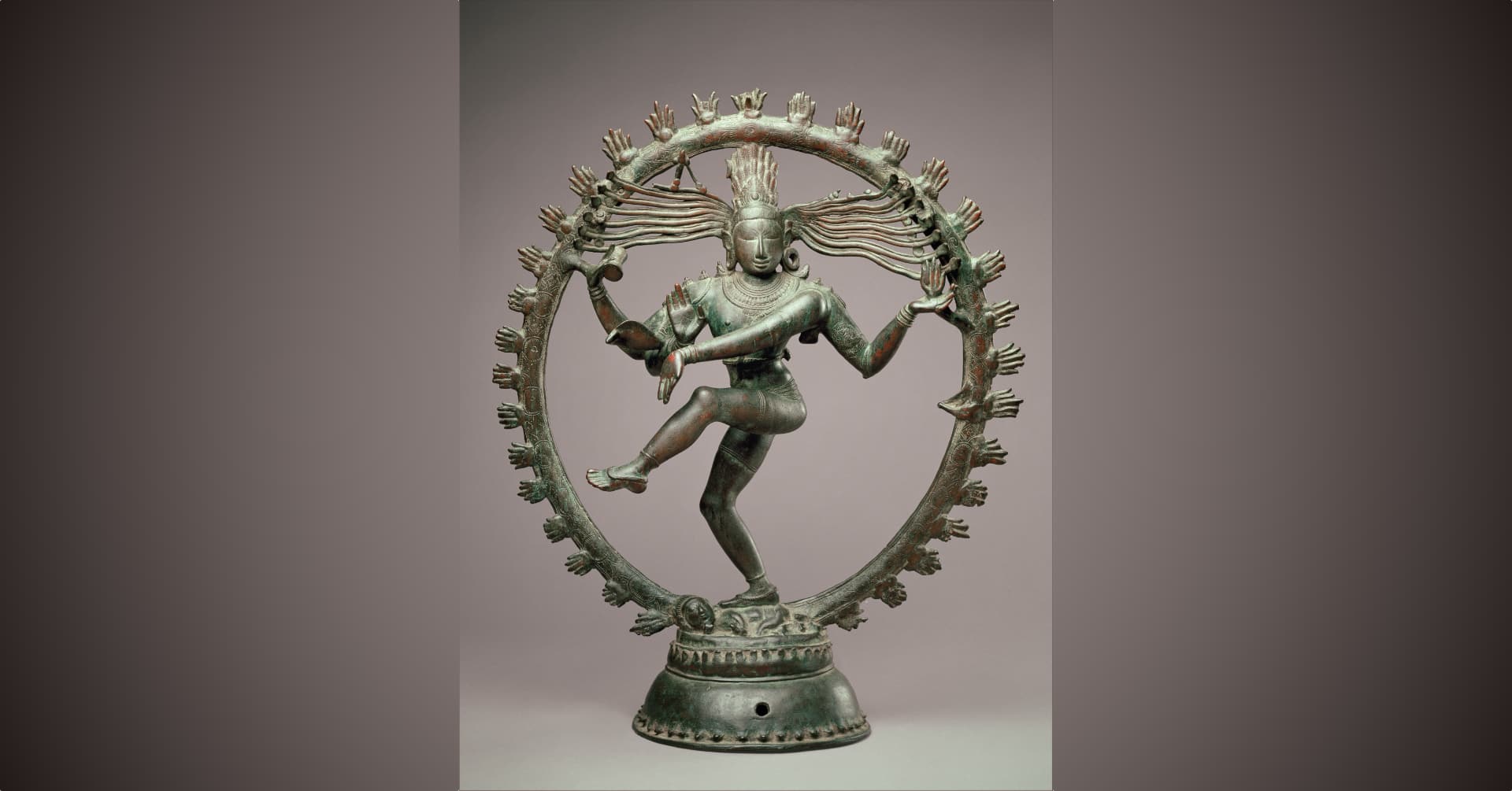
Shiva as Lord of Dance (Nataraja), ca. late 11th century, Chola period, Tamil Nadu, India. On view at The Met.
Understanding Shiva: The Sacred Teachings
Shiva - as the individual deity who guides, protects, and transmits wisdom, and as the consciousness principle he embodies and teaches. In this series of writings we explore Shiva's forms, activities, and nature, how to relate to Shiva as your guru and guide, and how to recognize what he represents within your own being.
6 parts published
6 parts total
Understanding Shiva: The Sacred Teachings
This writing track offers a comprehensive journey into understanding Shiva - both as the actual deity who can be approached, invoked, and related to, and as the teaching about consciousness and reality that he embodies.
Shiva is not merely a symbol or metaphor. He is a real being - the Adi Guru, the first teacher, who sits in meditation in subtle realms, trains at levels beyond ordinary comprehension, and responds directly to sincere devotees. He has personality, relationships, preferences. He can be felt, heard from, experienced.
And Shiva embodies universal principles - truths about consciousness, reality, and existence that he has fully realized and teaches through his very being. His forms are not arbitrary - they encode precise teachings. His actions reveal how reality operates. His nature shows what’s possible for consciousness itself.
Through six interconnected posts, we explore both dimensions: how to understand and relate to Shiva as deity and guru, and how to recognize the principles he embodies and teaches.
What You’ll Explore
-
Understanding Shiva’s Adornments: Each symbol - crescent moon, serpent, trident, blue throat, ash - reveals both aspects of Shiva’s nature as deity and principles of consciousness and spiritual transformation
-
Tandav: The Cosmic Dance: Shiva’s actual activity as deity (the dance he performs) and what this reveals about the rhythm of existence, creation/destruction cycles, and the nature of reality itself
-
The Fierce Face of Shiva: Shiva’s wrathful forms (Rudra, Bhairava) as actual manifestations he takes when fierceness serves, and what this teaches about when and why consciousness becomes fierce
-
Shiva’s Compassion: Shiva’s tender actions (drinking poison, protecting devotees) as actual expressions of his nature, and what this reveals about true compassion and how it operates
-
Sadashiva and Shiva: The distinction between Shiva in his absolute unmanifest form and Shiva as active deity, and how this maps onto passive witnessing awareness and active participating consciousness
-
Om Namaha Shivaya: The sacred mantra that both invokes Shiva as deity (calling to him, connecting with him) and works as consciousness practice (transforming how awareness operates)
Approach
These teachings honor both devotional relationship and direct understanding. They recognize Shiva as actual being you can approach, pray to, receive guidance from - and as embodiment of principles you can recognize in your own experience.
This is not choosing between devotion and understanding. It’s recognizing they’re two sides of one truth.
You can pray to Shiva (as individual deity who hears and responds) and recognize what Shiva represents (consciousness principles) without contradiction.
In fact, relating to Shiva as deity often leads naturally to recognizing the principles. And understanding the principles deepens the devotional relationship.
The language throughout these posts moves between both perspectives - sometimes addressing Shiva as deity, sometimes pointing to what Shiva embodies. This is intentional. Both are true. Both are necessary for complete understanding.
How to Work With This Track
Read in sequence for the full transmission, as each post builds on the previous.
Approach with both mind and heart:
- Let the intellectual understanding clarify what’s being taught
- Let the devotional feeling open you to receive transmission
- Both are necessary
Notice which dimension calls to you more strongly:
- If devotional: Let the teachings deepen your relationship with Shiva as guru and guide
- If philosophical: Let the teachings reveal principles about consciousness and reality
- If both: Let them work together, each supporting the other
Practice both relating and recognizing:
- Practice invoking Shiva, feeling his presence, asking for guidance (relationship with deity)
- Practice observing awareness, resting as witness, recognizing consciousness (understanding principles)
- Notice how they’re not separate
Return as you deepen:
- First reading: understand the teachings
- Later readings: receive the transmission
- Even later: recognize what was always here
Who This Track Serves
For devotees of Shiva wanting deeper understanding of who he is, what his forms mean, how to relate to him more fully
For spiritual practitioners drawn to Shiva but unsure whether to approach as deity or as consciousness principle - here, you’ll find both honored
For those receiving guidance from Shiva (in meditation, visions, direct experience) wanting to understand more about his nature and teachings
For students of Advaita or non-dual teachings wanting to see how deity worship and recognition of consciousness as your nature can coexist
For anyone sensing that the either/or approach (either worship deity OR recognize consciousness) misses something essential
What Makes This Track Different
Most teachings about Shiva either:
- Treat him only as external deity (worship but don’t recognize what he embodies)
- Treat him only as symbol/principle (philosophy but no relationship)
- Create confusion about whether he’s “real” or “just metaphor”
This track recognizes both dimensions as true and necessary.
Shiva IS an actual deity - powerful, real, accessible through devotion and invocation.
Shiva DOES embody principles - truths about consciousness that can be recognized directly.
These aren’t contradictory. They’re complementary. Understanding one deepens the other.
Begin the Journey
Start with Understanding Shiva’s Adornments and allow both relationship with deity and recognition of principles to unfold naturally.
Shiva as guru awaits your approach.
Shiva as consciousness awaits your recognition.
Both are invitation. Both are grace.
Om Namaha Shivaya
All Parts in This Track
When you see an image of Shiva, you're looking at a map. Not a portrait of a person. Not mythology for entertainment. But a precise diagram of spiritual truth encoded in symbols.
Tandav - the dance that ends cycles and begins them, that appears violent but is actually the most precise choreography in existence. This is not performance you watch from outside. This is the rhythm you are, whether you know it or not.
There's a Shiva that makes people uncomfortable. Not the serene meditator radiating peace. Not the graceful cosmic dancer. But Shiva with eyes blazing fire, teeth bared, hair wild with fury, body smeared with ash and blood, wearing skulls of those who opposed truth, howling destruction across the cosmos.
The same being whose third eye burns illusion to ash also cradles the dying with infinite tenderness. The same force that dances terrible destruction also drinks poison to save creation from suffering.This is the mystery that makes Shiva complete: unlimited power wedded to unlimited mercy.
Sadashiva - the eternal Shiva, consciousness at absolute rest, the unmanifest, pure awareness before anything arises. Shiva - the active Shiva, consciousness in motion, the manifest, awareness dancing as all experience. Understanding this distinction is understanding the fundamental nature of reality itself. And understanding how you - as consciousness - operate at both levels simultaneously. This is not philosophy. This is your direct experience right now, whether you recognize it or not.
Om Namaha Shivaya - Five syllables (six if you count Om separately). Millions of people chant this daily. It’s called the Panchakshara Mantra - the five-syllable mantra - one of the most powerful and sacred mantras in existence. But what does it actually mean? Not just the surface translation. But the layers of meaning encoded in these sacred sounds. The transformation these words create when truly understood and practiced. Let’s unfold the teaching contained in this mantra.